In a tropical country like Indonesia, air conditioning has become an essential necessity, with demand surging significantly over the past decade. Rising surface temperatures and higher humidity levels make cooling a priority compared to non-tropical regions. Furthermore, the ongoing coronavirus pandemic has led many individuals to work from home (WFH) or study from home (SFH), increasing the daily usage of electronic appliances and contributing to noticeably higher household electricity bills.
However, did you know that the spike in monthly electricity charges is largely driven by air conditioning? On average, AC units account for approximately 56% of total household electricity consumption, based on typical usage of around 10 hours per day (from 8 PM to 6 AM). Given that most activities during the pandemic are conducted at home, AC units often run longer than usual, further amplifying energy consumption.
To put this into perspective, the average basic tariff for low-voltage residential electricity in 2021 was IDR 1,444.70 per kWh. A standard 1 PK Non-Inverter AC consumes roughly 900 watts. Running it for about 10 hours daily over 30 days results in approximately 270 kWh/month. At the base tariff, this translates to roughly IDR 390,069 per month per unit. Operating multiple units simultaneously multiplies these costs significantly. This reality has driven numerous AC manufacturers to innovate, producing, and offering AC units equipped with Inverter technology.
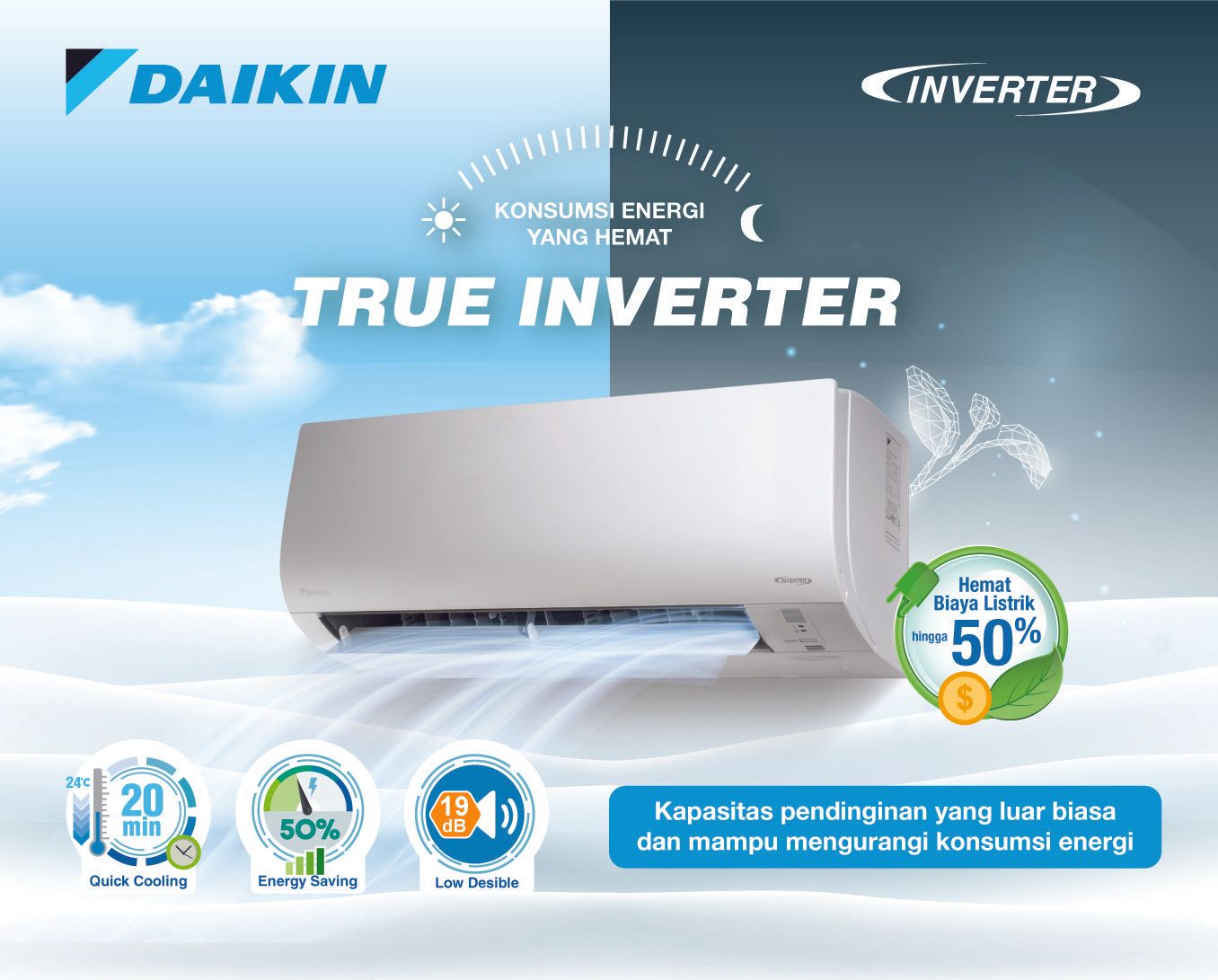
DAIKIN, a Japanese air conditioning manufacturer with over five decades of industry experience, stands as a pioneer in Inverter and Multi-Split technology specifically engineered to address the unique challenges of the Indonesian market.
Inverter-equipped AC units can reduce monthly electricity consumption by up to 50%. While the upfront cost is relatively higher than that of Non-Inverter models, the cumulative savings on monthly electricity bills quickly offset the initial price difference. Additionally, considering that a properly maintained air conditioner typically lasts around six years, the long-term economics become even clearer. Over a six-year period, the total ownership cost of one Non-Inverter AC is comparable to that of three Inverter AC units of the same capacity.
To ensure you make the right choice, visit your nearest authorized dealer to discuss your home’s cooling requirements. Always prioritize professional installation and reliable after-sales service for optimal performance and longevity.
After reading this article and reviewing your next electricity bill, will you still choose a Non-Inverter AC?