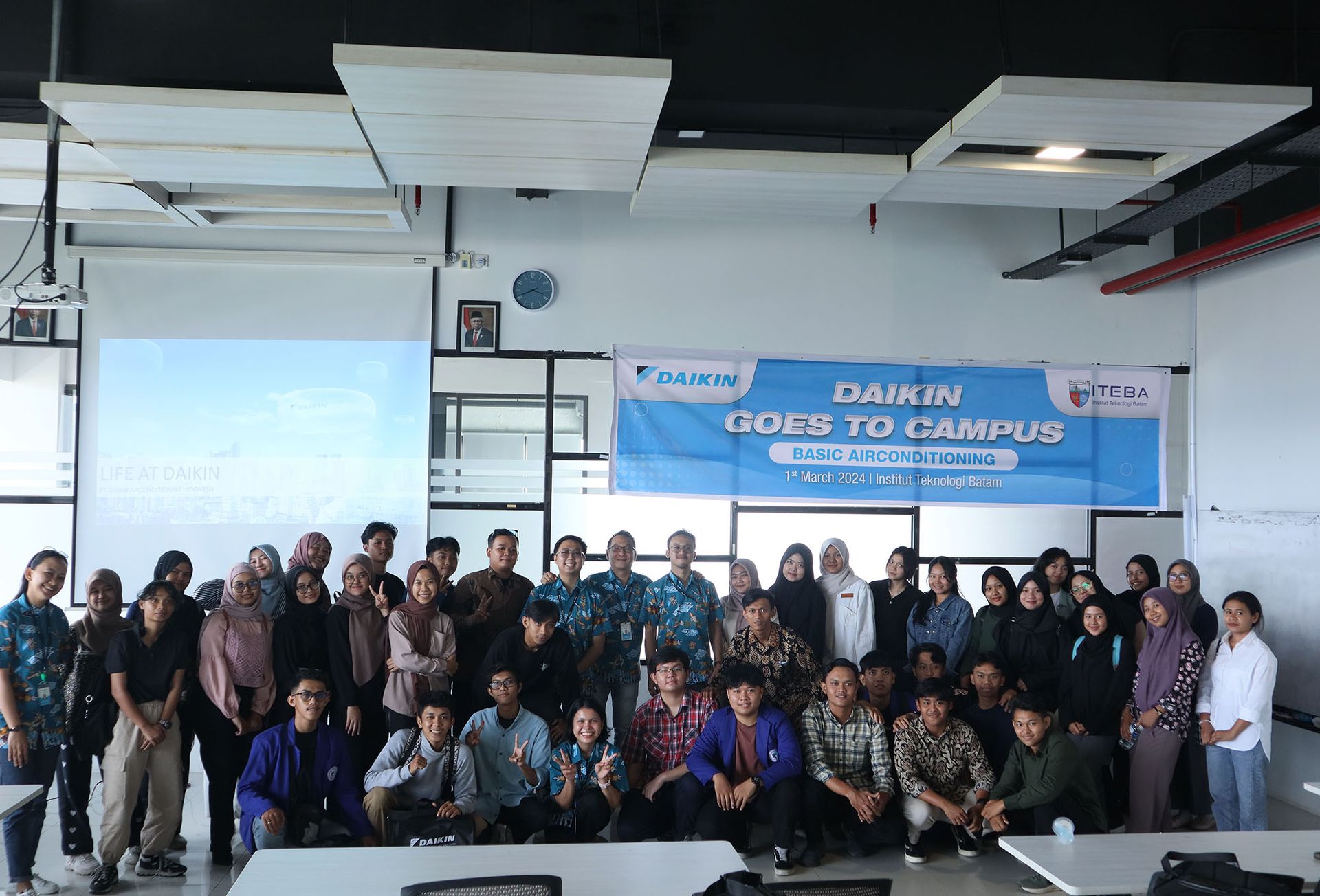
PT Daikin Airconditioning Indonesia (DAIKIN) continues to intensify its efforts in introducing the air conditioning solutions industry to the academic sector. One notable initiative was its visit to the Batam Institute of Technology on March 1. As part of the DAIKIN Goes To Campus program, the company delivered specialized lectures to the university's students.
"As an annual program conducted simultaneously across multiple locations, we hope to both inspire and prepare students for the workforce," said Danny Chandra, Branch Manager for DAIKIN in Batam and surrounding areas. He added that this initiative also reflects the company's commitment to fostering stronger relationships between industry and academia.
This strong partnership is considered vital for creating collaborations that enhance student quality and drive innovation, which are key to the long-term sustainability of the industry.
The DAIKIN air conditioning solutions lecture was held in Room B 314 on the third floor of the Batam Institute of Technology. Approximately 60 Industrial Engineering students attended. The main topics covered fundamental AC knowledge, inverter and non-inverter technologies, as well as internal workings and components.
Notably, the session went beyond theoretical delivery. Experts from the DAIKIN team facilitated an interactive segment to welcome questions, feedback, and opinions from attendees. "We want to ensure every participant is actively engaged, gaining broader insights into the air conditioning solutions industry, which has been DAIKIN's core expertise for nearly a century worldwide," explained Danny Chandra.
Beyond technical content, DAIKIN also shared corporate information and career opportunities within the company. This included an overview of career progression at the Japanese air conditioning solutions specialist that leads the Indonesian market, along with associated challenges and development prospects.
Danny Chandra emphasized that DAIKIN will continue to expand the DAIKIN Goes To Campus program to various vocational schools. "We believe that increasingly synergistic collaboration between industry and academia will be a primary driver in developing Indonesia's human resources for the future."


