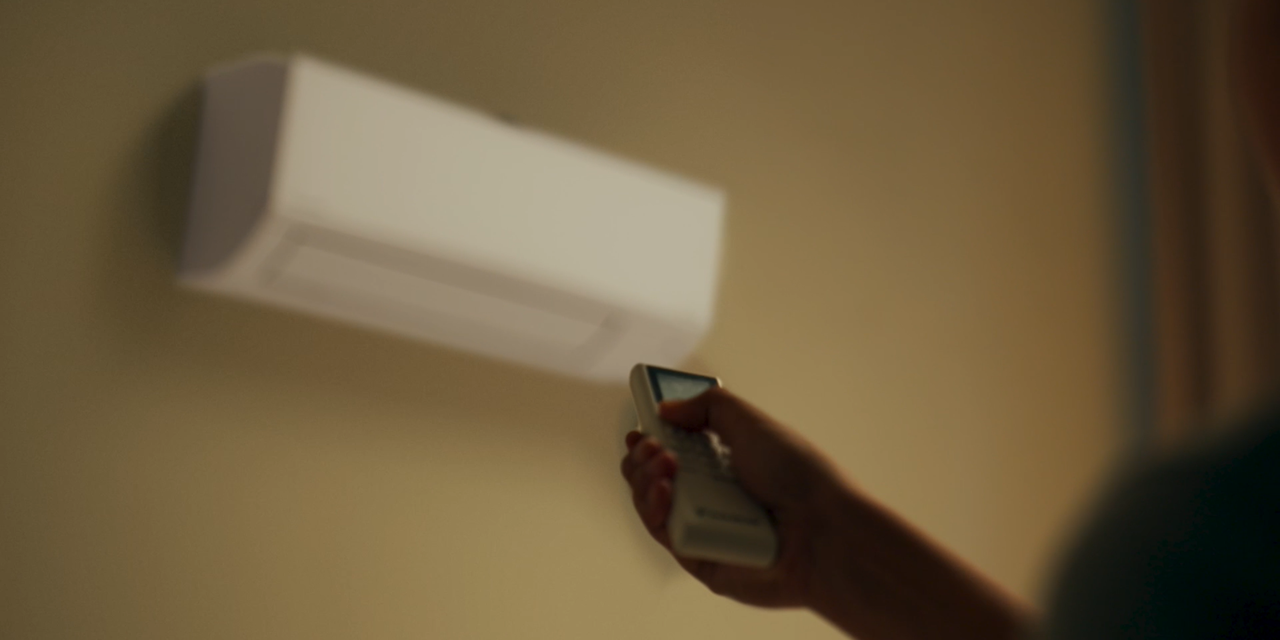
During sleep, our core body temperature drops by approximately 1°C—a seemingly small difference that can make a room that is too cold or too warm feel highly disruptive. So, what is the optimal AC temperature for a bedroom that promotes quick sleep onset without waking up shivering?
Many people lower their AC settings as much as possible for instant coolness, but this often backfires in the middle of the night. This article explores the ideal temperature, the role of humidity and airflow direction, and the best AC settings for comfortable, uninterrupted sleep.
What Is the Ideal Temperature for Sleeping?
There is no single universal answer for the exact AC temperature setting. From a sleep science perspective, the most ideal bedroom temperature ranges between 15.6°C and 19.4°C. Research suggests that cooler temperatures assist the body in achieving the core temperature drop necessary for deep sleep, including entering REM sleep phases.
However, this differs for those living in tropical climates. Such low settings often feel uncomfortably harsh, especially if the airflow is directed toward the body.
Therefore, a range of 22–26°C is more realistic. Many actually find the sweet spot at 24–26°C, as it offers physical comfort while remaining relatively energy-efficient.
Ultimately, the ideal sleeping AC temperature is one that allows you to fall asleep quickly and stay comfortable until morning, rather than simply being the lowest possible setting.
Why Does Too Cold Disrupt Sleep?
Determining the ideal bedroom AC temperature also requires understanding the effects of excessively low settings. Blood vessels may constrict due to overly cold air as the body attempts to preserve its core temperature.
Consequently, sleep becomes more easily disrupted, which can significantly degrade sleep quality even if you don't consciously notice it. While cool temperatures help, extremes—such as below 12°C—force the body to constantly work to maintain its own warmth.
Prolonged exposure leads to lighter sleep stages. You may also experience a dry throat and muscle tension, potentially waking up feeling less refreshed.
This aligns with human sleep cycles, which are often more sensitive to ambient temperature fluctuations than to constant, mild noise. Thermal comfort is no longer a minor detail; it has become the foundation of restorative sleep.
Temperature Is Low, But Still Feel Stuffy? Check Humidity
Many people focus solely on lowering the AC temperature for restful sleep but overlook a crucial variable that defines the "feel" of the air: humidity. This explains why you might still feel stuffy even when the thermostat is set low.
High humidity inhibits sweat evaporation, making your body feel warmer than the remote control indicates. For sleeping, comfortable indoor humidity levels generally range between 30% and 50%.
Levels below this range can cause dryness in the throat and nasal passages, often leading to sinus irritation. Conversely, humidity above this threshold makes skin feel uncomfortable and stifling during sleep, and can even promote the growth of mold and dust mites.
The good news is you can easily manage this by using the Dry Mode when humidity is high. Keep vents closed to prevent outside air from leaking in, and remember to draw curtains to block external heat from increasing the room's cooling load.
Adjust Airflow Direction, Modes, and Household Needs
Once temperature and humidity are balanced, small details like airflow direction often determine overall comfort. Avoid directing airflow straight at your body, as localized cold drafts can trigger nighttime awakenings even if the room temperature is otherwise appropriate.
For nighttime AC settings, Sleep Mode is a practical choice because it gradually raises the temperature in sync with your body's natural rhythm, resulting in more stable sleep.
Timers also help prevent the room from becoming too cold early in the morning. For infants, the bedroom AC should be set slightly warmer with indirect airflow. Through such adaptive approaches, all occupants can remain comfortable without compromising sleep quality.
AC Quality Shows in Stability, Not Extreme Settings
In practice, the number on the remote is merely a "target"—true comfort depends on how effectively the AC maintains that target throughout the room. Even airflow ensures consistent temperatures, eliminating cold spots near the unit and warm corners in the bedroom.
Stable cooling also helps the body remain relaxed throughout the night, as it eliminates the need to constantly adapt to sudden temperature shifts. System quality plays a critical role here.
Compressors that avoid frequent start-stop cycles tend to maintain smoother, more stable temperatures, operate more quietly, and deliver a more natural cooling sensation.
Comfortable Sleep Starts with the Right System
Once airflow is evenly distributed and temperature stability is achieved, there's no need to chase the lowest possible settings. Start with simple steps: set around 25°C, activate Sleep Mode, direct airflow toward the ceiling, and use a timer.
These measures keep the room comfortably cool without shocking the body in the middle of the night. The core principle remains the same: balancing temperature, humidity, and airflow is far more effective than relying on extreme settings.
DAIKIN Split AC comes equipped with advanced technology that maintains smooth and consistent cooling. This is highly beneficial for finding the right bedroom AC temperature that feels genuinely comfortable, not just artificially cold.
If you wish to tailor the system to your room's size and characteristics, contact us for precise initial setup, so you never have to guess the ideal bedroom AC temperature again.


