Household AC units typically run 15–50% of the day, averaging around 4 to 12 hours depending on weather conditions and room insulation. So, how long should an AC be turned off to prevent premature wear? Many search for this answer out of fear that the compressor might fail, rather than just for electricity savings.
It’s completely understandable to worry when the outdoor unit feels hot and has been running for an extended period. But is it really necessary to let the AC “rest” for 30 minutes to an hour? Let’s break down how the system actually works so you can stop guessing.
Myth: Turning Off the AC – Rest or Unnecessary Strain?
Many people turn off their AC for hours out of fear of damage. But is that truly the safest approach? Let’s look at the facts.
Myth: The AC Must Be Turned Off for at Least 1–2 Hours Daily
There is no technical standard mandating this duration. Questions like “how many hours can an AC run per day?” often stem from concerns about compressor overheating. It’s important to note that modern systems are designed to operate for extended periods as long as temperatures remain stable and airflow is adequate.
Myth: The More Often It’s Turned Off, the Longer It Lasts
This is a widely held misconception. Every time an AC starts up, the compressor draws a current 6–8 times higher than during steady operation. This surge is known as LRA (Locked Rotor Amps), which is necessary to overcome mechanical inertia and refrigerant pressure. Therefore, frequent start-stop cycles repeatedly subject the compressor to initial startup loads. These surges and instabilities are what actually shorten an AC’s lifespan.
Fact: Stability Matters More Than “Forced Rests”
Let’s reframe the question: instead of “how long should it be off,” ask “what happens when it’s turned off and back on?” If the system frequently restarts in short intervals, the initial startup load keeps repeating. In reality, stable operation at the right temperature is much healthier for the unit.
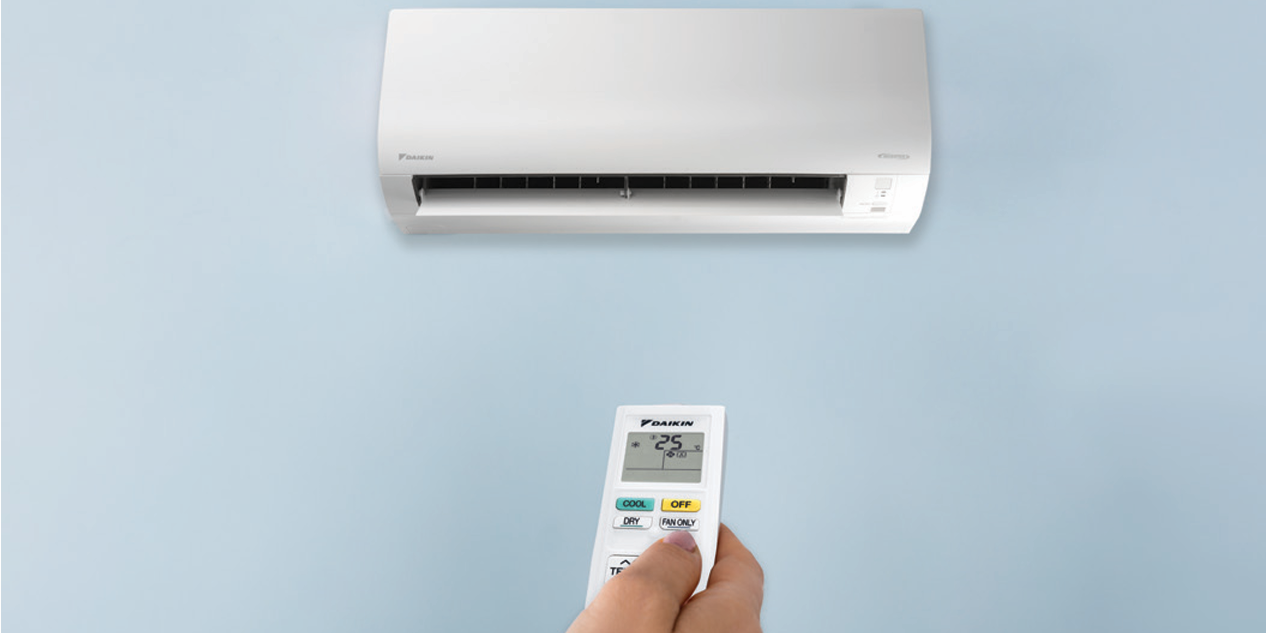
So, what AC temperature saves the most electricity? Ideally, setting it around 25°C while at home balances comfort and energy consumption. Just raising it by 1°C can significantly reduce power usage.
An AC doesn’t break down from running too long; it fails from repeatedly handling heavy loads under unstable conditions. Therefore, focus on maintaining a stable temperature and adopting smart usage patterns.
Does an AC Actually Need to Rest?
From a systemic perspective, the compressor stops pumping once you turn off the AC. Beyond that, refrigerant pressure gradually equalizes, and air circulation comes to a complete halt. Heat transfer ceases as the system enters a dormant phase—not a “rest” in the sense of a tired machine recovering. This pause is crucial for allowing high-side and low-side pressures to balance.
But what if you turn it back on immediately? The compressor must fight against unbalanced pressure differences, making the initial load even heavier. This is why many modern ACs feature a 3–5 minute automatic delay (anti-short-cycle protection) to safeguard the compressor from rapid restarts.
How Many Minutes Should You Wait Before Turning the AC Back On?
Now, let’s address the most common household scenarios that leave you hesitant.
After a Power Outage
The power goes out and then returns. Ideally, you shouldn’t turn the AC back on immediately. If your unit lacks an auto-delay feature, wait about 5 minutes. This pause allows internal pressures to equalize, preventing the compressor from starting under heavy load.
Overnight Usage
What if the AC runs for 8–10 hours while you sleep? Does it need to be turned off every afternoon? Not necessarily, provided the unit is properly sized and operating stably. In fact, for runtime exceeding 6 hours, inverter models can save 30–50% more energy compared to conventional systems under certain conditions. Avoid extreme fluctuations or forced pauses.
Hot Outdoor Unit
This isn’t a sign of danger. The primary function of the outdoor unit is to expel heat absorbed from indoors. As long as airflow is unobstructed and there’s enough clearance around the unit, that heat is simply a normal part of the cooling cycle.
Conventional vs. Inverter
The most noticeable difference lies in how the technologies operate. Conventional ACs tend to cycle on and off to maintain temperature, while inverters adjust compressor speed smoothly. Without harsh start-stop cycles, pressure and electrical draw remain stable. For extended use, inverter designs offer greater comfort and efficiency.
When Is It Necessary to Turn Off the AC?
Turning off the AC should be a decision based on actual conditions, not a daily ritual. Ideal times to power down include:
- During maintenance or cleaning
- During severe thunderstorms
- When a room remains unused for several days
- If unusual noises are heard from either the indoor or outdoor unit
If turning off the power becomes merely a daily habit, the risk of damaging AC components actually increases. Data shows that power surges and voltage fluctuations are major causes of premature failure.
Therefore, continuous operation isn’t the issue as long as the system remains stable. In fact, frequent unnecessary cycling drives up electricity consumption and accelerates component wear, whereas consistent, controlled operation is far safer.
System Stability Matters More Than Counting Hours
Ultimately, there is no mandatory rule dictating when an AC must be turned off. What truly matters is avoiding forced restarts, ensuring proper sizing for optimal airflow, and selecting a system designed for extended runtime.
DAIKIN AC, available in both conventional and inverter technologies, features advanced pressure management and stable current control. Besides cooling rooms quickly, you’ll enjoy long-term flexibility without needing to manually “rest” the unit.
Contact us today to find the perfect configuration tailored to your space. Stop worrying about how long your AC should be turned off—Daikin handles the rest.


