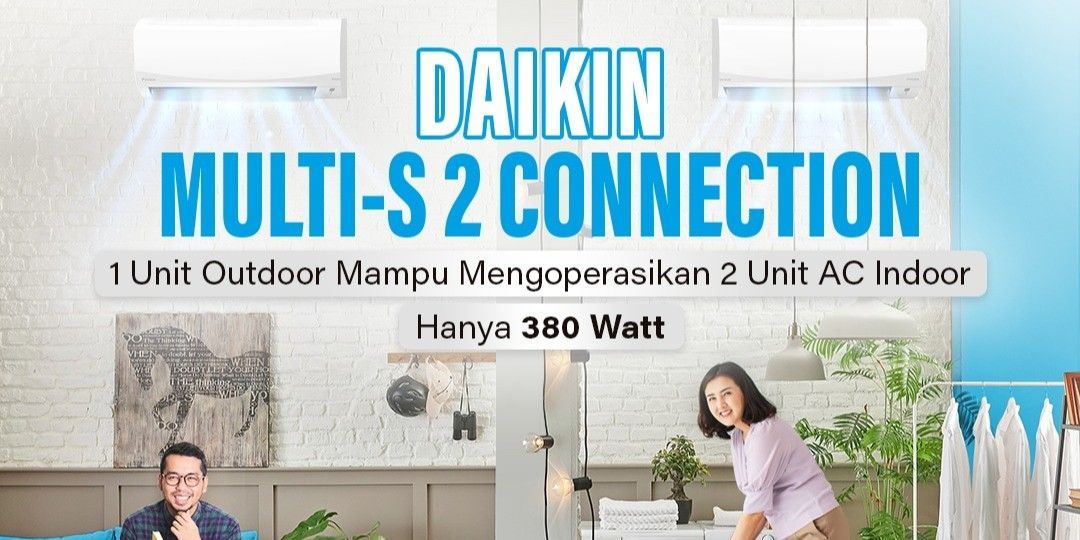
The pros and cons of a 1 outdoor 2 indoor AC setup often become apparent when moving into a cluster house or apartment, only to realize the balcony lacks space for two separate outdoor units. On top of that, noise from multiple outdoor units can disrupt peace. Residential noise levels are typically capped at 55 dBA to maintain a comfortable environment. With limited space and strict building regulations, a single system serving two rooms sounds highly appealing. But is it truly more practical, or does it hide hidden risks? Read on to find out before making your decision.
What Is a 1 Outdoor 2 Indoor AC System?
The 1 outdoor 2 indoor AC system operates on a one-to-many concept: a single outdoor unit acts as the central power source, supplying cooling to two separate indoor units. Each indoor unit maintains its own temperature control, meaning bedrooms and home offices don’t have to share the same settings. This flexibility eliminates the need for extensive ducting networks found in central air conditioning systems. Unlike large-scale building systems that merge airflow into a single pathway, a multi-split configuration preserves the “room-by-room” comfort experience—only the compressor and heat rejection components are shared. This creates a smart compromise between cleaner aesthetics, independent zone control, and optimized technical efficiency for modern homes.
How Smart Technology Powers Two Rooms
Refrigerant distribution is the core of this system. Cooling capacity is precisely divided among each indoor unit based on real-time demand. An electronic expansion valve manages this process, modulating its opening to ensure the exact amount of refrigerant reaches each room. Meanwhile, inverter load control monitors the combined thermal load of both spaces and adjusts the compressor speed in real time. In short, once a room reaches its target temperature, the system redirects power to other areas without waste. Energy consumption can drop significantly since the compressor doesn’t cycle on and off at full capacity like conventional systems. With more stable temperatures and quieter operational noise for daily use, a multi-split air conditioner remains a highly compelling option.
Why This Integrated System Differs from Two Standard Splits
Unlike standalone split AC units, this integrated system consolidates both the “brain” and “muscle” within a single outdoor unit. The PCB controller acts as the command center, processing signals from individual indoor sensors—monitoring temperature, humidity, and operational load—before directing refrigerant flow via solenoid valves to the rooms that need it most. Because all technical decisions operate within a unified ecosystem, multi-split AC installation demands high precision. The compressor here functions as a shared component, meaning any malfunction immediately affects both connected rooms. However, this integrated design also delivers far smoother control and energy efficiency that is difficult to achieve with separate units.
Advantages of a 1 Outdoor 2 Indoor AC System
Here are the benefits you gain when installing a multi-split AC system for your home.
1. Clean Facade & Enhanced Aesthetics
With one outdoor unit serving two rooms, balconies and building facades look significantly cleaner. No more cluttered rows of equipment disrupting architectural harmony or violating modern residential aesthetic guidelines.
2. Perceived Noise Reduction
Low-frequency noise becomes more intrusive when emitted from multiple sources. Concentrating the outdoor unit minimizes this effect. Additionally, indoor units operate much more quietly, reaching around 22 dB, creating a consistently peaceful environment.
3. High Efficiency for Staggered Room Usage
The inverter compressor operates like a dimmer switch—adjusting power output based on the combined load of both rooms. When one room is inactive, the compressor reallocates capacity accordingly, making multi-split AC electricity consumption far more rational than running two full-capacity units simultaneously.
4. Space-Saving & Streamlined Installation Routing
One outdoor unit means a single heat rejection point and one primary piping run. This simplifies installation routing, reduces wall penetrations, and keeps service access compact without compromising cooling coverage.
5. More Stable Temperatures Across Rooms
Centralized load control keeps temperature fluctuations well-managed. The system balances refrigerant supply to each indoor unit, allowing both rooms to reach their setpoints steadily without the capacity competition often seen in separate split units.
Key Considerations Before You Decide
After reviewing the advantages, it’s equally important to weigh the often-overlooked aspects so your decision is well-rounded, realistic, and tailored to your home’s conditions.
1. Single Point of Failure Risk
Both rooms rely on a single outdoor unit. This also means any outdoor malfunction will immediately impact both spaces. This risk requires serious consideration, especially since 1 outdoor 2 indoor AC systems typically carry a higher price tag than standard single units.
2. Precise Capacity Sizing is Critical
Accurate BTU calculation is crucial. Incorrect sizing can lead to significant performance drops. Studies even show that mismatched systems can lose tens of percent in efficiency due to unbalanced loads, refrigerant flow, and pressure dynamics.
3. Installation Demands High Precision
Piping length and refrigerant balancing between indoor units must be executed accurately. Even minor flow imbalances can leave one room comfortably cool while the other lags behind, eroding comfort and increasing long-term compressor workload.
4. Higher Initial Investment
Comparing multi-split and standard split AC systems, the integrated setup indeed requires a larger upfront investment. Its components and engineering are more complex, though long-term operation often proves more efficient and space-optimized.
5. Maintenance Requires Specialized Technicians
Routine maintenance cannot be handled casually. Technicians must understand multi-zone systems and centralized control logic. Without this expertise, repairs may be misdiagnosed, potentially increasing downtime across both connected rooms.
With all these factors in mind, it’s time to explore a solution that truly fits your needs. Discover Daikin’s multi-split AC solutions or contact us for expert consultation, then make your final decision based on the proven advantages and considerations of a 1 outdoor 2 indoor AC system.


