In tropical countries like Indonesia, air conditioning has become a secondary necessity that has seen a significant rise in demand over the past decade. This trend is driven by rising global temperatures and increasingly humid conditions compared to non-tropical regions. Furthermore, during the ongoing coronavirus pandemic in Indonesia, various activities have required many people to work from home (WFH) or even study from home (SFH). Consequently, the increased use of electronic appliances is often cited as a primary reason for soaring household electricity bills.
However, did you know that the surge in monthly electricity bills is largely driven by residential power consumption, with a staggering 56% attributed to air conditioner usage? This 56% figure is based on an average daily runtime of just 10 hours (from 8 PM to 6 AM). Given that most pandemic-era activities take place at home, actual AC runtime often exceeds normal levels, making this percentage even higher.
To put it into perspective, the average 2021 low-voltage base electricity tariff in Indonesia was IDR 1,444.70 per kWh. A 1 PK Non-Inverter AC can draw up to 900 watts of power, with an average daily runtime of around 10 hours or more.
Therefore, running an AC for 10 hours consumes approximately (900W × 10 hours/day) × 30 days = 270,000 Wh/month, which equals 270 kWh × IDR 1,444.70 = IDR 390,069 per month. This is just for a single AC unit. So, what happens when multiple units run simultaneously? It is precisely this reality that has driven numerous AC manufacturers to compete in developing, producing, and offering AC units equipped with inverter technology.
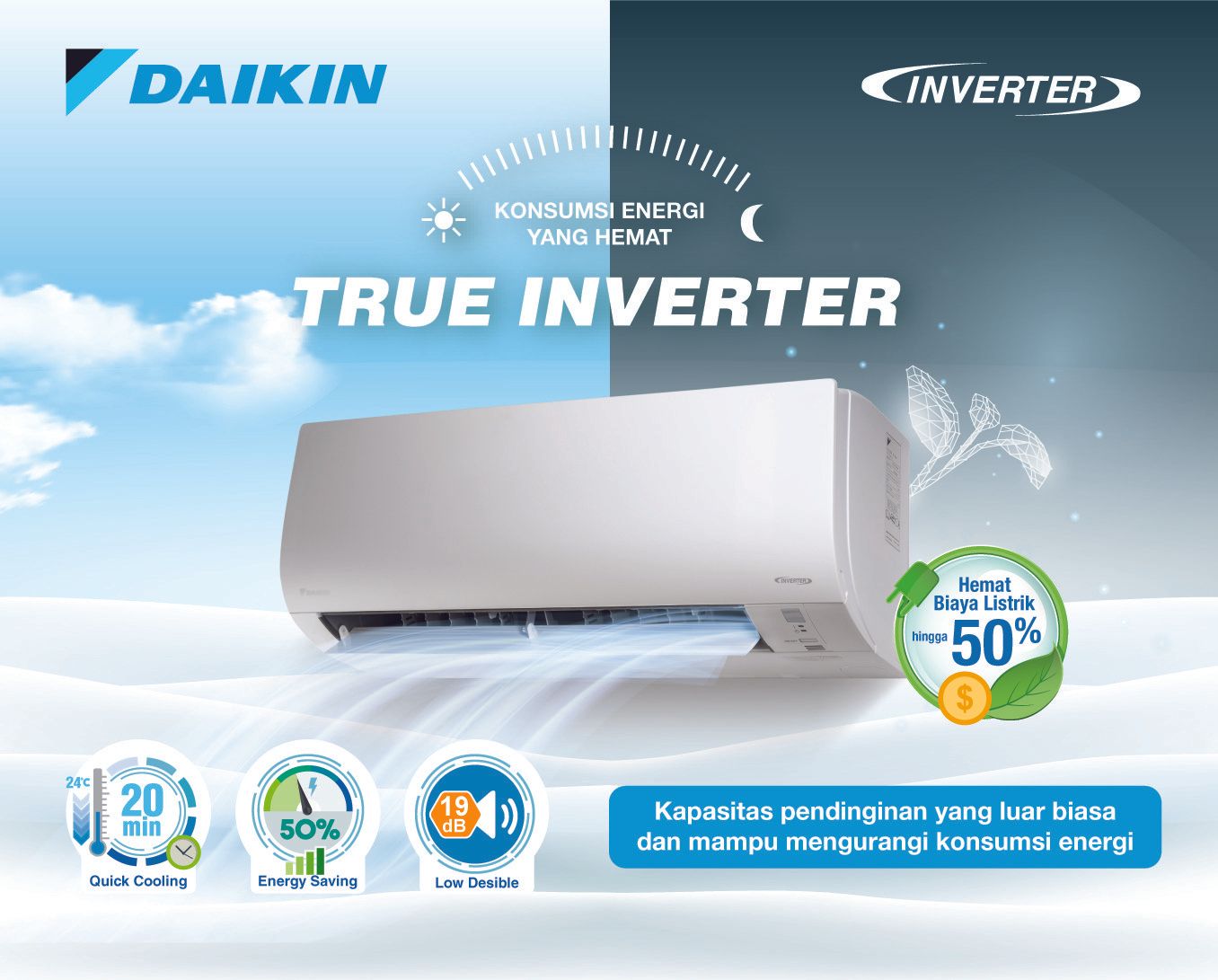
DAIKIN, a Japanese air conditioning company with over five decades of presence, pioneered inverter technology and Multi AC systems specifically engineered to address the unique challenges of the Indonesian market.
Inverter AC technology has proven capable of reducing monthly electricity consumption by up to 50%. Although the upfront cost of an inverter unit is relatively higher than that of a Non-Inverter model, the cumulative savings on monthly electricity bills make it significantly more affordable over time. This becomes even more apparent when considering that, with proper maintenance, an AC unit can last up to six years. In fact, the total cost of ownership for one Non-Inverter AC over six years is comparable to the total cost of three same-capacity Inverter ACs over the same period.
To ensure you make the right choice, discuss your home cooling needs with authorized dealers at nearby stores. Make sure your unit is installed correctly and backed by reliable after-sales service.
So, after reading this article and reviewing your next electricity bill, are you still sticking with a Non-Inverter AC?