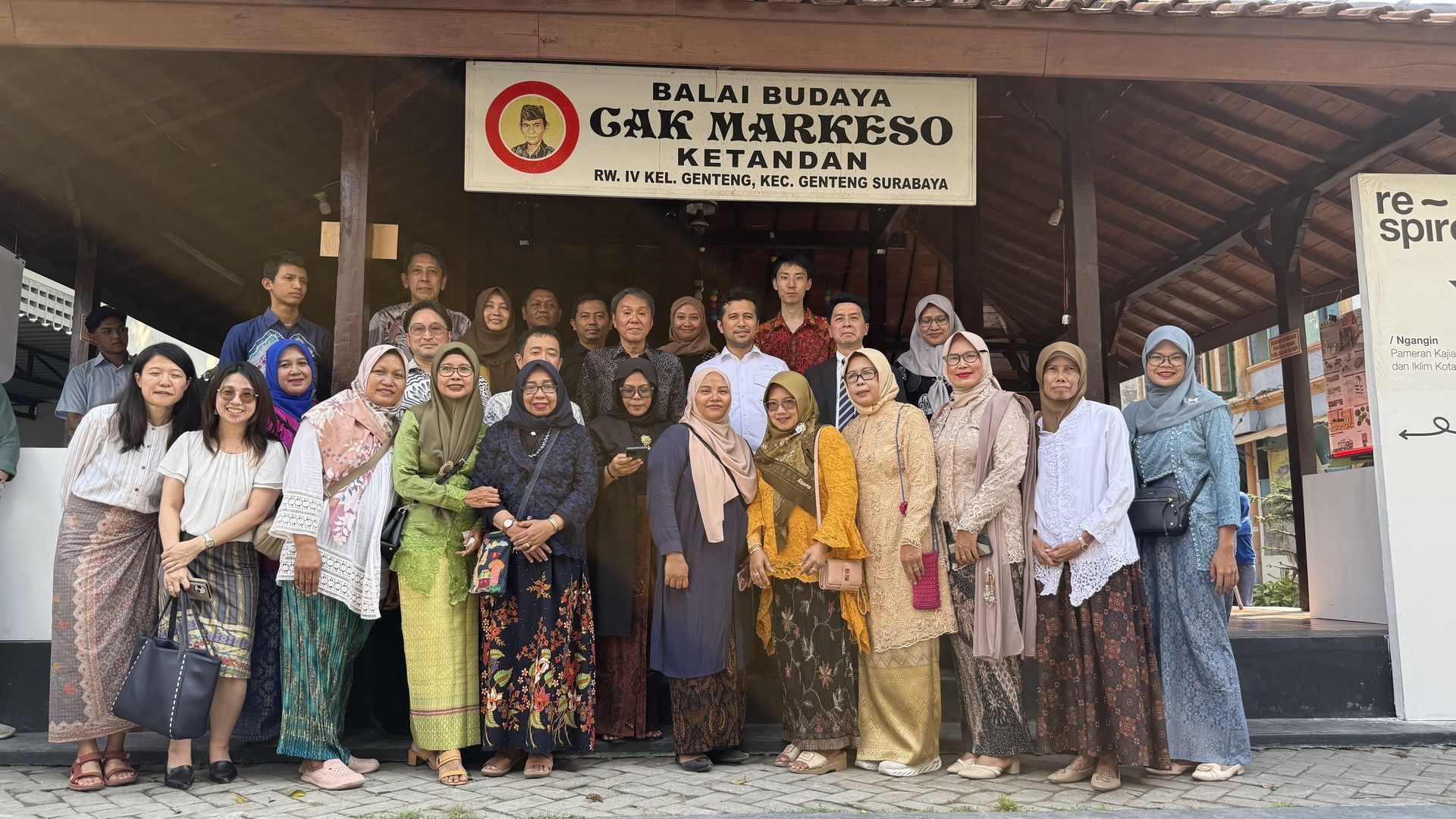
Surabaya, December 10 – PT Daikin Airconditioning Indonesia (DAIKIN) officially reopened the RW 04 Kampung Ketandan Community Hall in Surabaya today (Dec 10). This milestone coincides with the completion of the multipurpose hall renovation, a key component of a joint research collaboration between DAIKIN, the Center for Southeast Asian Studies (CSEAS) at Kyoto University, Japan, and Operations for Habitat Studies (OHS).
“More than just a shared community space, this renovation aims to transform the community hall into a safe haven for residents during extreme heat conditions,” stated Budi Mulia, Director of PT Daikin Airconditioning Indonesia and PT Daikin Industries Indonesia. He added, “We designed it as a practical example of public space architecture that helps communities adapt to climate change,” Budi Mulia noted during his speech at the inauguration.
The renovation of the RW 04 Kampung Ketandan Community Hall in Surabaya is a major component of the research partnership between DAIKIN and CSEAS Kyoto University, which began in 2021. Its primary objective is to develop cooling techniques tailored to local building types and residential AC usage patterns across Southeast Asia in response to rising extreme temperatures.
The selection of this specific community hall was driven by two key factors. First, its location in Surabaya, known for high ambient temperatures. Second, the high frequency of community activities held there, making it an ideal candidate for a heat mitigation site.
Aligned with this goal, the renovation integrates both passive and active cooling technologies. Passive cooling measures include strategic ventilation placement and raised roof designs that channel cool outdoor air throughout the interior while directing hot air upward. To enhance airflow, the elevated roof is equipped with exhaust vents to expel heated air outside. “This improved natural ventilation ensures the community hall remains comfortable even without mechanical cooling assistance,” Budi Mulia explained.
On the other hand, active cooling was implemented through the installation of DAIKIN air conditioning units in two rooms within the hall. These units are specifically designed to effectively cool each room, which accommodates four to eight people. Additionally, the rooms can be combined to create a larger open space for community gatherings.
In line with this initiative, Budi Mulia noted that DAIKIN also utilized these two rooms to conduct direct field research comparing energy consumption between Inverter and Non-Inverter AC systems. By installing both unit types with identical cooling capacities in separate rooms, performance monitoring is conducted by alternating their operation over set periods.
Notably, while residents can use the space free of charge, the renovation introduces a paid booking system for those wishing to utilize the AC for room cooling. Supported by a dedicated mobile application, users can pay based on their selected duration. “The collected funds will go into the neighborhood fund to cover electricity bills and AC maintenance. This design element ensures the project’s long-term sustainability,” Budi Mulia added.
Also present at the inauguration was Emil Elestianto Dardak, Deputy Governor of East Java, who expressed his appreciation for DAIKIN’s efforts and the collaborative approach behind the renovation. He highlighted that the project creates more climate-resilient public spaces. Furthermore, he noted that the hall now serves as a vibrant communal hub that supports local artists and Micro, Small, and Medium Enterprises (MSMEs) from the Ketandan community.
He specifically praised the prepaid application system that allows residents to access the indoor AC units. According to Dardak, this feature embodies community solidarity and ensures the ongoing operational viability of the facility.
Echoing DAIKIN’s vision for this renovation, Deputy Governor Dardak further expressed hope that the RW 04 Ketandan Community Hall will serve as a true blueprint for future public space development. “We hope this community hall will inspire similar initiatives in other regions,” he concluded.


