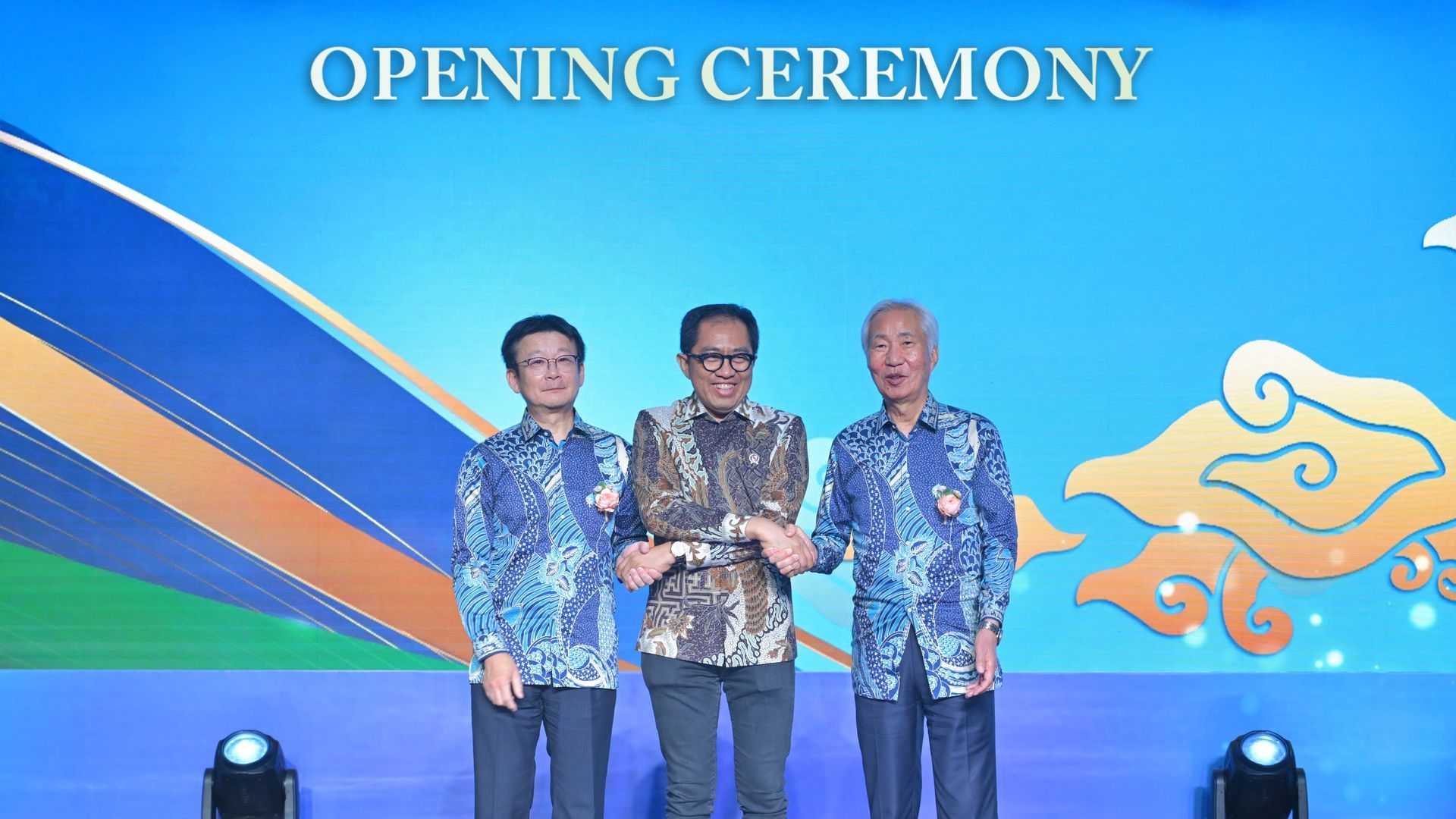
Cikarang, May 15, 2025 – DAikin officially announced the start of mass production for residential ACs at Indonesia’s first full-scale residential AC plant on Wednesday (May 14). Operating under PT Daikin Industries Indonesia (DIID), this new production facility is slated to launch locally manufactured residential AC units to the Indonesian market in July 2025.
During his remarks at the inauguration, Representative Director, Chairman of the Board, and CEO of Daikin Industries, Ltd., Masanori Togawa, emphasized that the new plant plays a strategic role in DAikin’s regional growth roadmap across Asia. “Indonesia is a crucial part of our expansion strategy in Asia. With this new production facility, we can deliver products to the Indonesian market faster and more reliably, while strengthening DAikin’s leadership position in the air conditioning industry across Asia and globally,” he stated.
Togawa added that DAikin’s decision to build Indonesia’s first full-scale residential AC plant aligns with the company’s global strategy, which consistently emphasizes the importance of a strong presence in every country and region. This is achieved through operational localization, building close ties with local markets, and aligning DAikin’s business activities with the specific needs of each location.
He further noted that, like all DAikin plants worldwide, the Indonesian facility will operate under the same high-quality standards. “Therefore, I am confident that this production facility will fully meet the expectations of the Indonesian people,” said Masanori Togawa.
Echoing Togawa’s comments, Representative Director, President, and COO of Daikin Industries, Ltd., Naofumi Takenaka, highlighted that with Indonesia’s continued economic growth, DAikin sees significant potential in the AC market, particularly in the residential sector. “We aim to introduce high-quality ‘Made in Indonesia’ products tailored to this market’s needs, while growing alongside Indonesia in the coming years,” said Naofumi Takenaka.
Furthermore, Takenaka stressed the plant’s important role in supporting sustainable environmental efforts. The production facility was designed with a forward-thinking approach. “We integrate automation technology and energy-saving initiatives through various innovations within the plant, including real-time energy consumption monitoring. This is part of our ongoing commitment to reducing environmental impact and driving sustainable development,” explained Naofumi Takenaka.
Takenaka also noted that the plant’s presence will positively impact community welfare. Beyond creating over 2,500 jobs, it will serve as a training hub for developing highly skilled and competent Indonesian professionals in air conditioning solutions.
The morning inauguration ceremony in Cikarang was attended by Deputy Minister of Trade Dyah Roro Esti. She emphasized that DAikin’s investment in Indonesia aligns with the government’s goal of fostering national industrial growth. She mentioned that the Ministry of Trade is currently focusing on three key areas: maintaining domestic market stability, empowering MSMEs to access global markets, and expanding export capabilities to various countries.
“We view DAikin’s investment through the construction of this plant in Indonesia as a sound decision, given its strong potential to generate a multiplier effect. We hope that the DAikin plant will contribute to social and economic growth, strengthen local supply chains, create new employment opportunities, and accelerate technology transfer. All of these factors will support the enhanced competitiveness and resilience of the national trade sector,” stated Dyah Roro.
The event continued with an evening Opening Ceremony in Jakarta, attended by Deputy Minister of Industry Faisol Riza. On this occasion, he highlighted the importance of this fresh initiative in supporting efforts to reduce Indonesia’s reliance on imported residential ACs, which reached USD 420.46 million in 2024.
According to him, the government, through the Ministry of Industry, continues to push strategic policies, including optimizing the Increased Use of Domestic Products (P3DN) program, reforming Domestic Component Level (TKDN) regulations, and implementing mandatory National Standards of Indonesia (SNI) for electronic products starting in July 2025. “With these steps, we hope DAikin will contribute to increasing local content, including eventually producing core components such as AC compressors that are currently imported. This will undoubtedly strengthen national independence and the domestic supply chain,” clarified Faisol Riza.
He further expressed optimism that DAikin will open up significant opportunities for Indonesia to develop into a production and export hub for ACs to ASEAN markets. After all, DAikin possesses a global production network and benefits from technology transfer processes taking place at its new plant.
Leading the plant’s operations, President Director of PT Daikin Industries Indonesia (DIID), Khamhaeng Boonthavee, confirmed that this manufacturing facility operates in strict adherence to Japanese production standards and procedures. He noted that this is made possible through close collaboration and strong support from DAikin’s three main production bases: DAikin Japan, DAikin Thailand, and DAikin Malaysia.
Through this collaboration, PT Daikin Industries Indonesia (DIID) has introduced state-of-the-art machinery and equipment to support plant operations, including the implementation of the Internet of Things (IoT) and energy-efficient appliances. “Indonesia’s first full-scale residential AC plant is built with the vision of delivering globally standardized DAikin products, reflecting the company’s commitment to quality and innovation,” said Khamhaeng Boonthavee.
Director of PT Daikin Industries Indonesia (DIID) and PT Daikin Airconditioning Indonesia (DID), Budi Mulia, added that the plant, with an annual production capacity of up to 1.5 million units, will manufacture three primary models of residential ACs. Production will primarily focus on inverter-based units due to their energy efficiency and environmental benefits. This reflects DAikin’s efforts to reinforce its role in supporting a greener future, aligned with the Indonesian government’s energy-saving initiatives.
He also explained that this investment serves as tangible proof of DAikin’s contribution to Indonesia’s social and economic growth. With its full production capability, the plant opens greater opportunities for various business sectors, particularly Micro, Small, and Medium Enterprises (MSMEs), to become DAikin’s business partners in Indonesia. “Our commitment to quality and socio-environmental contributions reflects our effort to make DAikin the right choice for the Indonesian people,” concluded Budi Mulia.
***
About PT Daikin Industries Indonesia (DIID)
PT Daikin Industries Indonesia (DIID) is a subsidiary of Daikin Industries, Ltd., a global leader in the air conditioning industry committed to innovation and sustainability. Located at the Greenland International Industrial Center (GIIC) in Cikarang, DIID operates Indonesia’s first full-scale residential AC plant with an annual production capacity of 1,500,000 household AC units.
With an investment value of IDR 3.3 trillion, the plant supports carbon neutrality goals through digitalization and automation technologies integrated throughout its production processes. DIID is committed to strengthening Indonesia’s economy by absorbing up to 2,500 local workers, meeting Domestic Component Level (TKDN) and National Standards of Indonesia (SNI) requirements, and ensuring every product produced adheres to DAikin’s Japanese quality standards.


