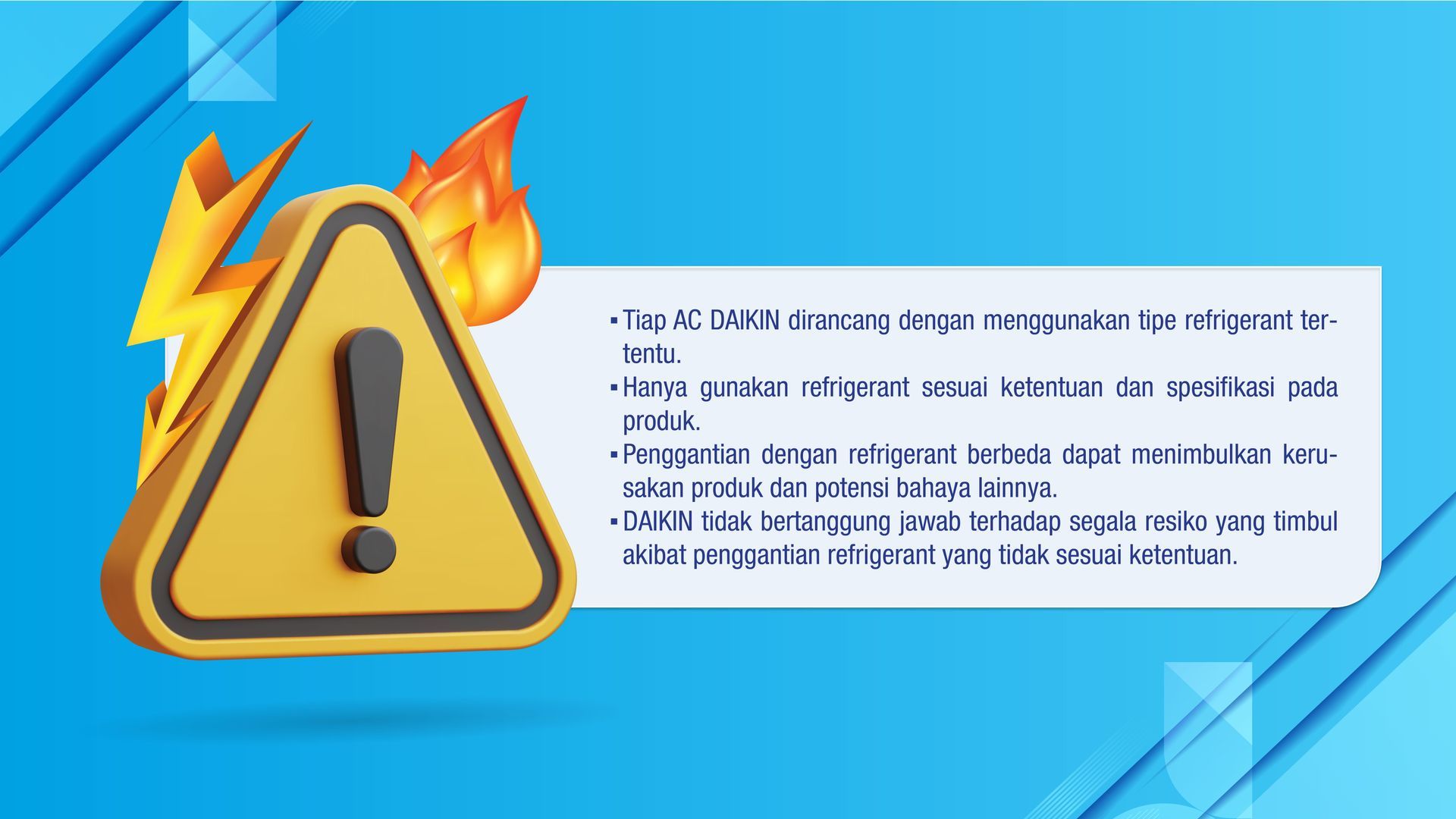
Caution! Using improper refrigerant not only causes damage to air conditioning units but can also potentially trigger explosions leading to fires.
We issue this reminder regarding growing misconceptions surrounding R290 refrigerant. Marketed under various names and promoted as being more environmentally friendly and energy-efficient, what often goes unnoticed is the refrigerant's inherent flammability. Based on available technical data, R290 contains propane as a primary component.
According to the International Electrotechnical Commission (IEC), propane falls under the A3 classification, indicating substances with a high fire hazard. The IEC is the leading international standards organization that develops and publishes global standards for electrical, electronic, and related technologies.
Given these critical safety factors, DAIKIN never recommends or promotes any refrigerant that lacks endorsement from recognized international bodies and compliance with local government regulations.
Every DAIKIN air conditioning unit clearly specifies the factory-approved refrigerant type—either R410A or R32—to ensure optimal system performance. Both are internationally recognized and accepted as eco-friendly refrigerants with an Ozone Depletion Potential (ODP) of zero.
Furthermore, extensive research and testing by various international organizations confirm that these refrigerants pose a significantly low risk regarding toxicity and flammability. This verified safety profile has led to their widespread global acceptance as environmentally responsible and safe-to-use options.
To prevent the spread of unverified claims, DAIKIN strictly prohibits replacing the factory-specified refrigerant with any alternative. Consequently, DAIKIN will not be held liable for any accidents, damages, or incidents resulting from unauthorized refrigerant substitutions.


