

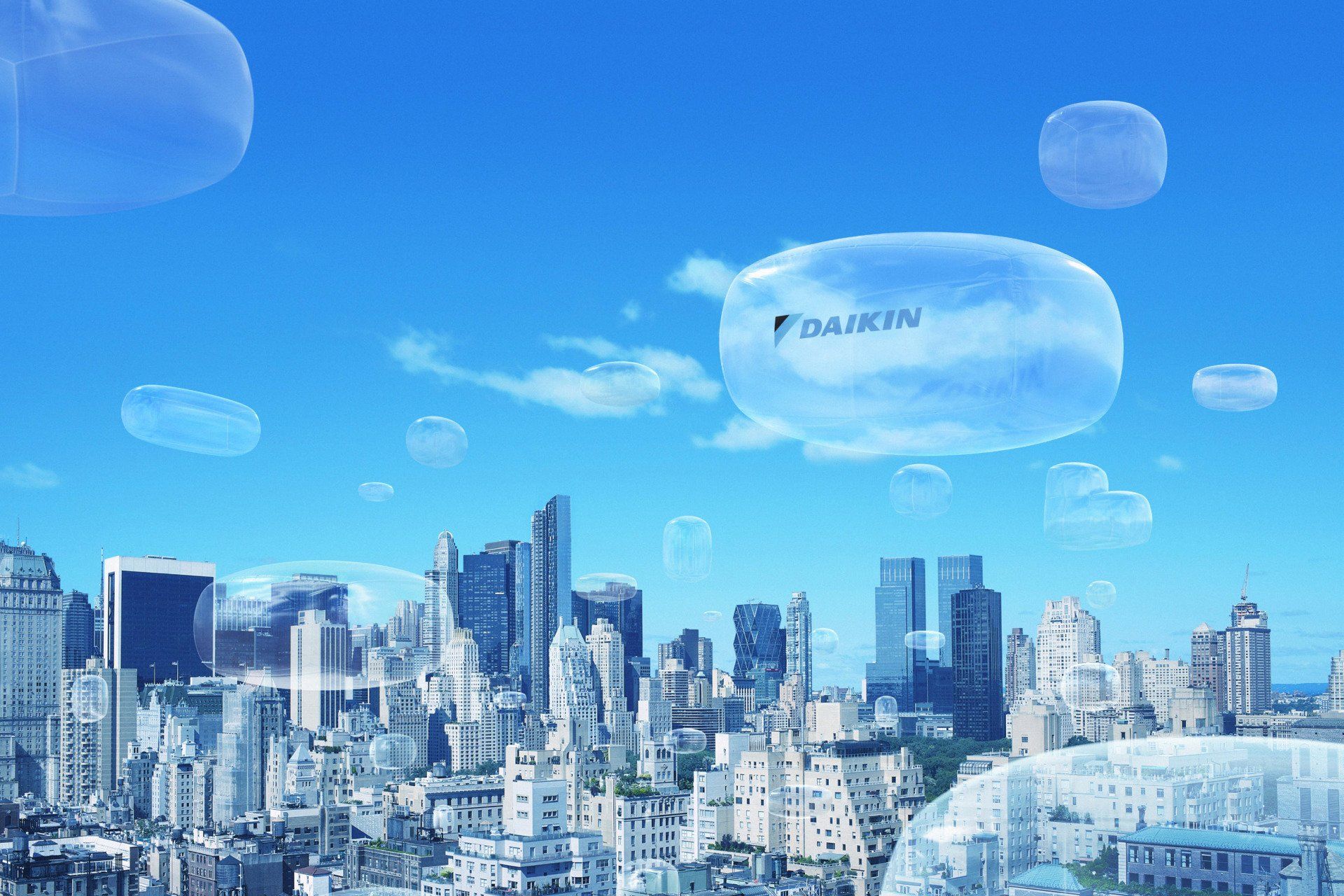
WORLD SHAKERS
Daikin • 12 Desember 2019
Ninety-five years on and Daikin is still blowing away the competition while bringing dignified and respectful living to millions.
Founded in 1924 in Osaka Prefecture, Daikin Industries has grown from a Japanese company to a global industry leader in the field of HVAC (heating, ventilation, air conditioning) and refrigerants.
After opening its first air conditioning factory in Sakai, in southern Osaka, Daikin’s story is one of constant innovation and hands-on practicality, with an organizational model that stresses a close relationship between its dealerships and dedicated employees—the joint human resources that are the beating heart of Daikin’s corporate identity.
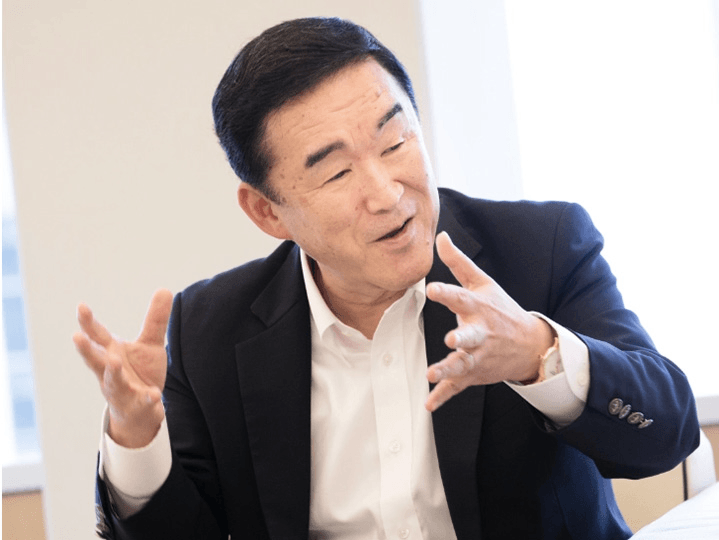
Yoshihiro Mineno
Senior Executive Officer, Daikin
“Innovation is our lifeblood”
“We started small, especially when you compare us to our competitors—well-known conglomerates with massive resources and other home electronics and appliances,” says Senior Executive Officer Yoshihiro Mineno. “And we’ve been able to turn this to our great advantage.”
The ability to innovate, and to do so at speed, has been key to the company’s story. “Because we are an AC specialist, we invest all of our resources into developing AC technology,” says Mr. Mineno. The company was the first in Japan to develop fluorocarbon refrigerant, which, by 1951, they’d put to use in Japan’s first-ever packaged air conditioning unit.
Today as it celebrates its 95th anniversary, Daikin has more than 100 global production and sales bases, operates in more than 150 countries, and has over 76,000 employees. In addition, its global sales, currently in excess of $22.4 billion, have seen year-on-year growth for nearly a decade now.
Yet its history wasn’t all plain sailing. “The summer of 1994 was unusually cool, and Japan faced negative growth,” says Mr. Mineno. “We felt that, practically, we had no option but to focus on investing overseas. It was counter-intuitive in some senses, but it worked.”
Because the international marketplace for air conditioners at the time was still undeveloped with very few dealers, Daikin shifted its organization model. By approaching salespersons from a range of different industries, it was able to strengthen how it worked through local dealerships.
“We went to local communities and persuaded locals to become dealers. Overseas, a lot of plumbers who understood the system became air conditioning agents, the international counterparts to the rice salesmen we had first begun recruiting here in Japan. We also saw bicycle shop owners signing up. We educated them about our products and they gave us valuable insights into customers’ needs, which in turn allowed us to quickly innovate and design new products,” says Mr. Mineno. “It’s still our greatest advantage compared to our rivals, who took a less diverse, more single-stream approach; they couldn’t match us.”
In addition to its close relationship with local dealers across the globe, Daikin’s growth continued through key acquisitions in Malaysia (O.Y.L Industries in 2007), Germany (Rotex Heating Systems in 2008), the U.S. (Goodman Global Group in 2012), Italy (Zanotti in 2016) and Austria (AHT in 2019). These new channels allowed the company to expand its international sales, product portfolio and peripheral offerings, which in turn propelled Daikin’s success, allowing it to reach Global #1.
As Daikin looks toward its 100th anniversary in 2024, it strives to stay true to its core values and markets, while continuing to diversify through strategic alliances and acquisitions and mergers. The service and solutions sector is seen as another key frontier. “Technology will be key as we develop cloud-based systems to control air conditioner systems in large building complexes,” says Mr. Mineno, adding that big developments are on the horizon.
“Innovation is our lifeblood,” he says with a smile. “We started small, and compared to the corporate giants, our body may still be small, but we have long arms and strong legs! The Japanese word for ‘the world’ is sekai. We’ve expanded our business from ‘Sakai’ to ‘sekai’, and we’re still fighting.”
Number one Down Under
Today, Daikin’s global expansion continues apace. Australia is one of its most dynamic markets for nearly 50 years and counting. Here, the story has evolved to showcase a globally adaptive company that responds to local needs with local solutions.
In the case of Australia, Managing Director Shoji ‘Shaun’ Uehara stresses the increasing role that services and solutions will play in the company’s value proposition moving forward, and observes that the company’s swift application of product design, based on feedback from its local dealerships, is a supremely successful template that works far beyond Japanese shores.
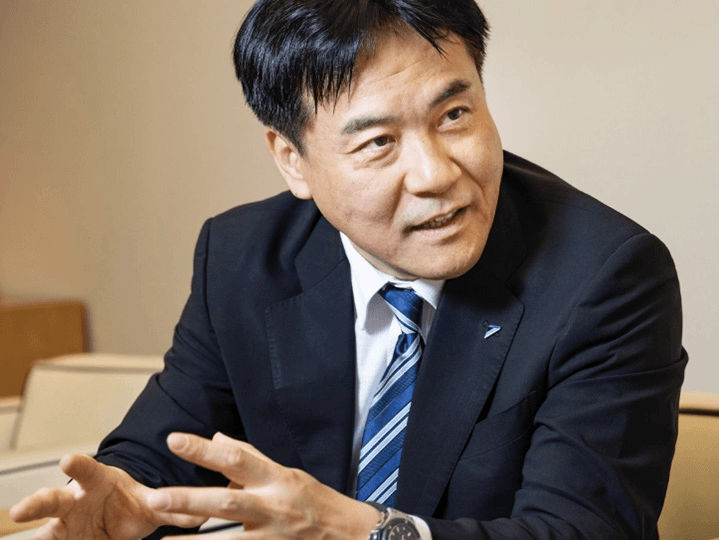
Shoji ‘Shaun’ Uehara
Managing Director, Daikin Australia
“Diversity is key, in so many senses, to Daikin’s success”
“As we seek greater profitability and future growth as part of our Fusion 20 Strategic Management Plan, mergers and acquisitions play an important role,” says Mr. Uehara. “With this in mind in the Australian market, in 2017 we acquired Airmaster Corporation—the country’s leading buildings service provider.”
“Diversity is key, in so many senses, to Daikin’s success, and Airmaster gives us even closer access to the market as it has contracted relationships with over four thousand building owners.” This strategic acquisition has allowed Daikin to expand into peripheral businesses while also tapping into Australia’s demand for services and solutions, occupying half of its air conditioners market.
Mr. Uehara notes that the Australian market has been notoriously difficult to crack, yet Daikin stubbornly dug in and is now number one, besting top competitors from Japan. “We learned from local sources that Australian house design was changing with lowered roof spaces, meaning that there was demand for flatter, more compact air conditioning units. And we could quickly design those, using our experience gleaned in other overseas markets.”
Daikin Australia was quick to seize the opportunities afforded by the nation’s apartment and condo-minium construction boom. “Our local sources told us that strict urban planning regulations meant there was a need for air conditioning systems where the outdoor unit on the balcony wasn’t visible from the street,” says Mr. Uehara. “Also, compact indoor units, narrow enough to fit in a closet, were preferred. I found indoor units developed by Daikin in China that fit the bill, then we refined them with engineers at Daikin Japan and sold them with great success in Australia. This is just one example of how our comprehensive group strength enables local success through market adaptation.”
Booming with The New India
In India, Daikin has expanded rapidly over the past decade, edging out its otherwise established competitors with a “local production for local consumption” strategy, and by 2020 it plans to expand its sales networks to 10,000 locations across the rapidly developing subcontinent.
Helmed by industry veteran Managing Director and CEO Kanwal Jeet Jawa, Daikin India’s emphasis on high-tech, reliable, efficient, eco-friendly products and production has earned it great accolades—and sales figures—in a nation with a huge affinity and respect for Japanese companies and brands.
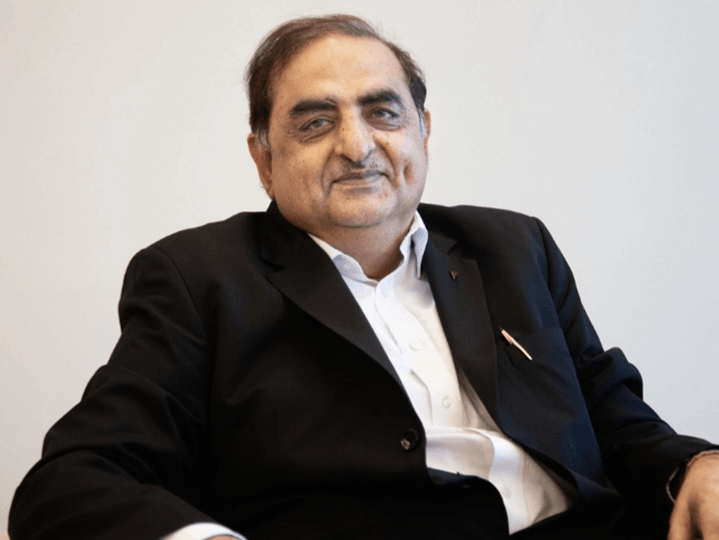
Kanwal Jeet Jawa
Managing Director and CEO, Daikin Airconditioning India
“Japanese products are perceived as avant-garde, pathbreaking, and Daikin is seen as a trailblazer in India”
“Japanese products are perceived as avant-garde, pathbreaking, and Daikin is seen as a trailblazer in India,” says Mr. Jawa.
Daikin’s success in India is based on several factors, he explains. “We do simple things right and with speed. All the efforts are focused around customer needs as we nurture our ‘High Image, High Quality’ brand perception with products suitable for Indian conditions. Since 2009 we have taken the lead in every field, be it inverter technology, green refrigerants or skill development.”
The company’s nationwide success in the latter field is a source of considerable pride for the man who has spent four decades growing India’s air conditioner industry.
“We’ve opened Daikin Centers of Excellence in close to twenty academic institutions to help train and supply skilled human capital, fully embracing Prime Minister Modi’s call for skill development in today’s booming India,” Mr. Jawa says.
The scale of Daikin India’s commercial success and societal influence is impressive, with the country’s “biggest factory, biggest training center and biggest warehouse.”
“Our underlying philosophy,” says Mr. Jawa, “is to nurture skill, expand our scale and build sustainability through our long-term vision.”
Mr. Jawa attributes Daikin India’s success to “a marriage of Japanese brains and Indian brawn”. With its advanced technology, Daikin was the first to launch inverter air conditioners and green refrigerants in the world’s second most-populous market.
“We are using Japanese monozukuri-style training programs to uplift and improve the standards of air conditioning industry, and society as a whole,” says Mr. Jawa, referring to the Japanese art of improving craftsmanship to uphold manufacturing practices. “We formed the first all-women branch of the Japan-India Institute of Manufacturing, for example. Daikin is a socially conscious organization and India is a fine example of how we put this into practice. We practice what we preach.”
Today as it celebrates its 95th anniversary in more than 150 countries across the globe, Daikin continues to lead the air-conditioning and refrigeration industry with innovation, speed, reliability and a strong motivation to enrich the lives of others through its high-tech, quality products and professional, personalized service. From Osaka to the world, Daikin is leading the way and forging the future.
Company profile
Daikin Industries, Ltd., established in 1924 in Osaka, Japan, is a global company recognized as one of the largest HVAC manufacturers in the world.
With more than 76,000 employees worldwide and business operations in over 150 countries, its net sales for fiscal 2018 (ended March 31, 2019) totaled 2,481.1 billion yen ($22.4 billion). Daikin’s consistent success is derived, in part, from a focus on innovative, energy-efficient, and premium indoor air quality and comfort management solutions.
You might also like

Kita dikatakan mengonsumsi sekitar 1,5 kg makanan dan sekitar 2 liter air setiap hari. Namun, berapa banyak udara yang kita hirup? Karena kita bernapas secara otomatis, kita jarang memikirkan jumlah udara yang melintasi tubuh kita. Padahal, dibandingkan dengan makanan yang kita makan dan air yang kita minum, jumlahnya ternyata sangat besar.
Kita menarik napas puluhan ribu kali setiap hari, tetapi udara di sekitar kita seolah tidak pernah habis. Mengapa demikian? Jawabannya terletak pada sejarah panjang Bumi serta siklus oksigen dan karbondioksida secara terus-menerus yang digerakkan oleh makhluk hidup. Dengan menelusuri bagaimana planet kita telah berubah selama 4,6 miliar tahun terakhir, kita dapat memahami dengan lebih baik bagaimana udara yang kita hirup terbentuk.
Udara itu tidak kasat mata—Anda tidak dapat melihat, menyentuh, atau memegangnya dengan tangan Anda. Namun, jika tidak dapat dilihat, apakah udara benar-benar dapat dianggap sebagai suatu zat? Lebih dari 2.000 tahun yang lalu, orang-orang telah menemukan jawabannya. Mari kita lihat lebih dekat penemuan yang membuktikan keberadaan sesuatu yang tidak terlihat ini, beserta beberapa sifat udara yang menakjubkan.
